See more on our Facebook page:

Friday, February 7, 2025

Today's South Branch flooding - Springfield Gauge

 Today's flooding at 14.92 was the 89th highest in recorded history. Surprisingly, there have been 18 higher water levels in the last 20 years (24 in the last 25 years). Notice that they're not necessarily annual events.

See the full list of 90 high water historical events (sorted by rank or by date) at https://docs.google.com/spreadsheets/d/1L9nEFii5yABTtVCNcSxOpSxw7krttOy3SpQ7iKdlFNo/edit 

Use File, Make a Copy, and do further analysis on your own.  Please share new insights at  


Thursday, February 6, 2025

February 7 prediction for minor flooding - Springfield gauge

 This prediction represents a 24,000 CFS surge of water raising the water level from 4ft to over 17 feet at the Springfield gauge in a 12-hour period.


Tuesday, January 28, 2025

Easy Bird feeding observation closeup

 Unfortunately, shaded lenses are necessary for most birds to be comfortable.  Both Northern and Carolina chickadees can be conditioned to feed from your hand if you remain still, but eye movement so close would be a concern for these species too.


Saturday, January 25, 2025

Vultures finding Gas Pipeline leaks

 We first learned about this from a graduate student and were skeptical. However, quick research revealed that Turkey Vultures were known to be useful for finding pipeline gas leaks, documented back to the 1930's when mercaptan was first added to natural gas.


Wednesday, January 22, 2025

How Does Climate Change Affect Tick Habitat and the Spread of Lyme Disease in Georgia?

 How Does Climate Change Affect Tick Habitat and the Spread of Lyme Disease in Georgia?

By: Nidhi Gadekar, January 22, 2025


Introduction

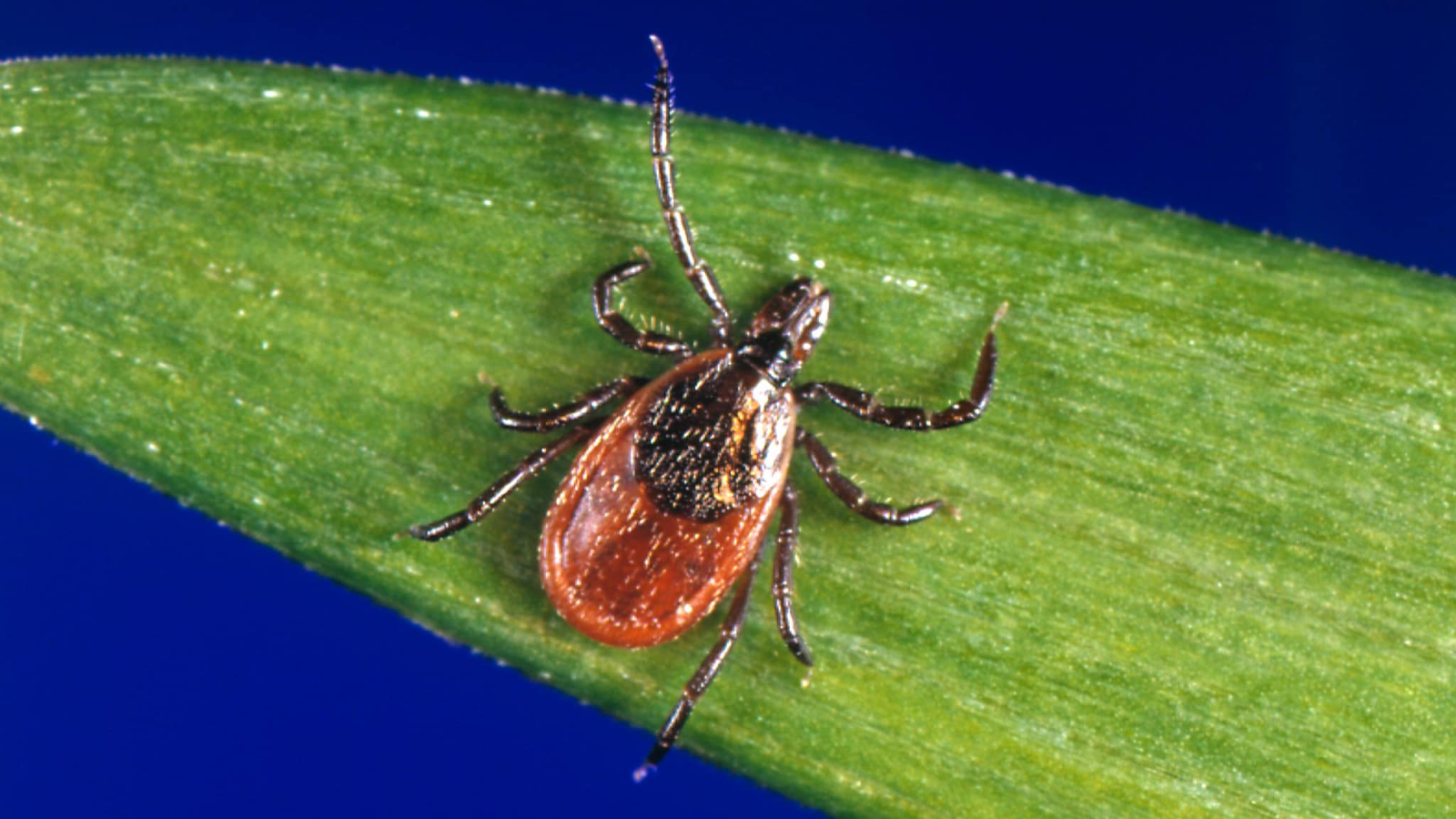
As global temperatures rise due to climate change, one of the issues the world faces is the spread of Lyme disease. Lyme disease is a bacterial infection caused by Borrelia burgdorferi and transmitted through the bite of infected black-legged ticks (Ixodes scapularis). It’s the most vector-borne disease in the United States, with approximately 476,000 Americans diagnosed and treated annually, according to the CDC.  It is most commonly found in the Northeast, mid-Atlantic, and Upper Midwest regions in the U.S., but Lyme disease is even greater in central and eastern European countries.


(Source: Blacklegged Tick Surveillance)


While Lyme disease is traditionally common in cooler regions like the Northeastern U.S., it is becoming a growing concern for Southern States such as Georgia. This is particularly alarming because Lyme disease can cause debilitating long-term complications if not treated early. Understanding how climate change influences the spread of Lyme disease in traditionally warmer climates is essential for public health preparedness and prevention. In this post, we’re advocating for the exploration of how climate change is expanding tick habitats, tick prevalence, and population density, in Georgia and the role of Geographic Information Systems (GIS) in understanding and managing the potential for increased Lyme disease risk. 


Overview of Lyme disease

Lyme disease can be characterized by two stages: 

  • In the early stage (3-30 days post-bite), the patient has symptoms such as fever, chills, headaches, fatigue, and an erythema migrans rash, which has a bull's-eye appearance. 

Friday, December 27, 2024

Planting trees

 The best time to plant a tree was 20 years ago.  The second best time is today.  We hope to do it until we can no longer hold a shovel.


Monday, November 18, 2024

Distinguishing Common Oak Tree Species

 More on distinguishing tree species after the leaves fall.  Identifying oak tree species: 


1. Northern Red Oak (Quercus rubra). Key Features: The bark appears striped on older trees due to these shiny ridges, especially noticeable in sunlight.

2. White Oak (Quercus alba). Key Features: The overall appearance is lighter and ashier compared to other oak species.

3. Scarlet Oak (Quercus coccinea). Key Features: The inner bark is reddish, visible when cut or scratched, and the furrows are not as deep as in other oaks.

4. Black Oak (Quercus velutina). Key Features: The deep ridges and orange inner bark are diagnostic. Bark becomes almost furrowed like an alligator’s skin with age.

5. Chestnut Oak (Quercus montana). Key Features: The deep furrows and thick, rugged plates make it one of the most textured oak barks.

6. Swamp White Oak (Quercus bicolor). Key Features: The two-tone bark (lighter, peeling upper bark, and darker, furrowed lower bark) is a defining characteristic.

7. Pin Oak (Quercus palustris). Key Features: The smoother appearance of mature bark distinguishes it from more deeply furrowed species like black or chestnut oak.

Tuesday, November 5, 2024

Predicting Insect Emergence

Predicting Insect Emergence

by Bridget Baron

Introduction

From the grass you walk on to the food you eat, and even the clothes you wear, your daily life relies upon insects. Urban life often feels disconnected from nature, but that could not be further from the truth as urban life relies upon the global ecosystem. Because the global ecosystem is propped up by insects, it is not an exaggeration to say that human beings are reliant on insects for our survival. As such, scientists spend significant time tracking insect populations.


This report discusses the reasons why tracking insect populations is important, as well as summarizes my exploration of using one example of software scientists predicting insect emergence, the Degree-Days, Risk, and Phenological event mapping (DDRP) program created by Brittany S Barker, Leonard Coop, Tyson Wepprich, Fritzi Grevstad, and Gericke Cook.


Insects and Agriculture

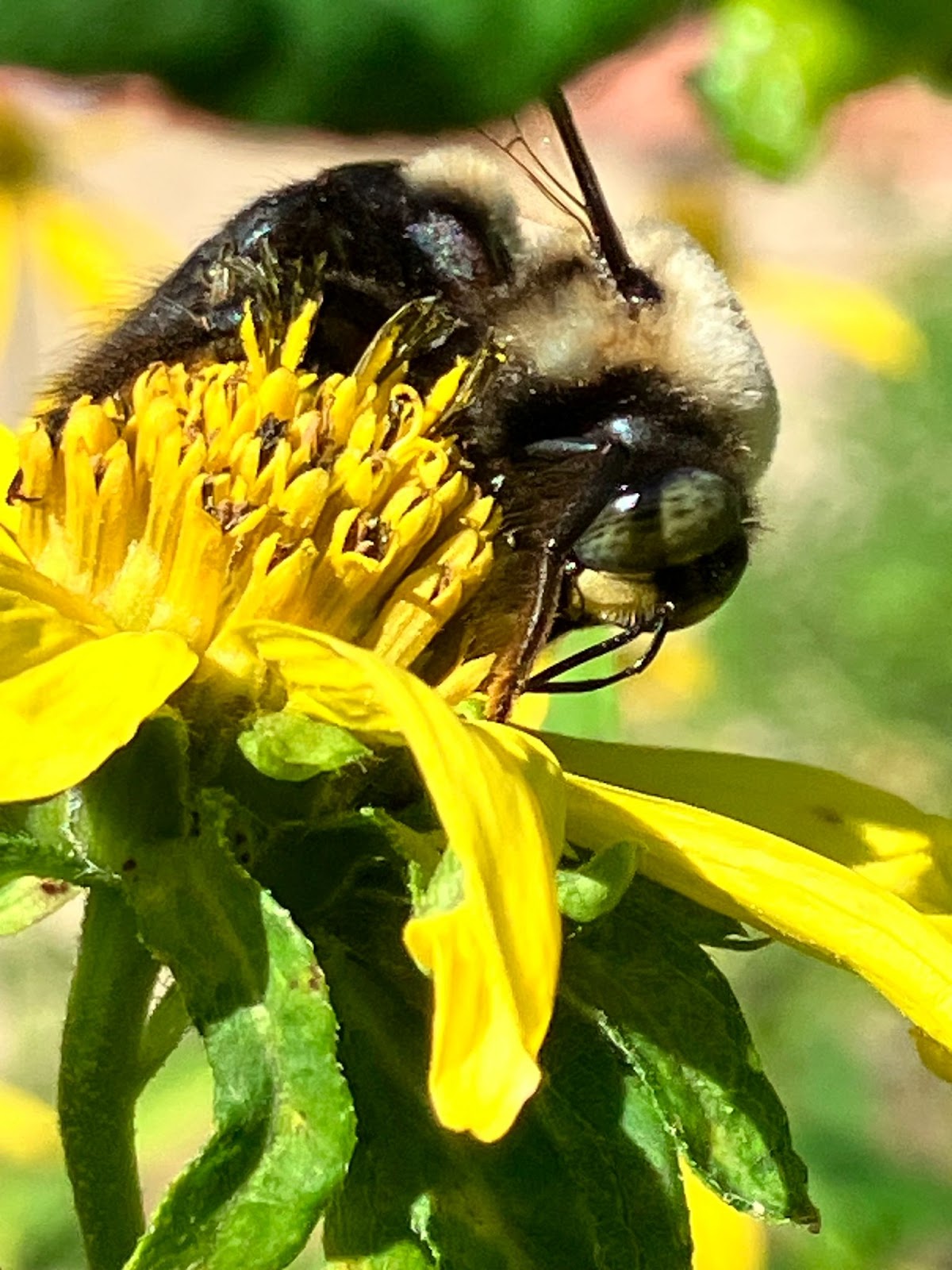
75% of all crop plants depend on insects for pollination (National Geographic). This includes food crops as well as plants like cotton that are used to produce textiles. Insects maintain healthy soils, as well. Dung beetles, among others, are insects that specialize in the decomposition of decaying organic matter. They return nutrients to the soils, which allow more plants to grow and keep the circle of life turning. There have even been some cases where introducing termites into arid fields made them fertile again within less than a year (National Geographic). Termites and other ground-burrowing insects (like ants!) aerate soils with their tunnels. This allows water, oxygen, and nutrients to reach deeper down and protects soil quality (National Geographic).


However, not all insects are beneficial to agriculture. Pests are insects that consume or destroy beneficial or domesticated plants. In the United States, several of the most harmful pests are invasive species, such as the Emerald Ash Borer Beetle and the Asian Longhorned Beetle (USDA). Invasive species come from other ecosystems and are often generalists. Generalists are not reliant upon a single source of food and adapt well to competition and new environments (i.e. raccoons). Conversely, many native species are specialists. These are species that have evolved to rely on a small number of food sources to avoid competition (i.e. pandas). These species often play vital roles in their native ecosystems but are very vulnerable to competition when an aggressive invasive species arrives to eat their food and use their habitats.


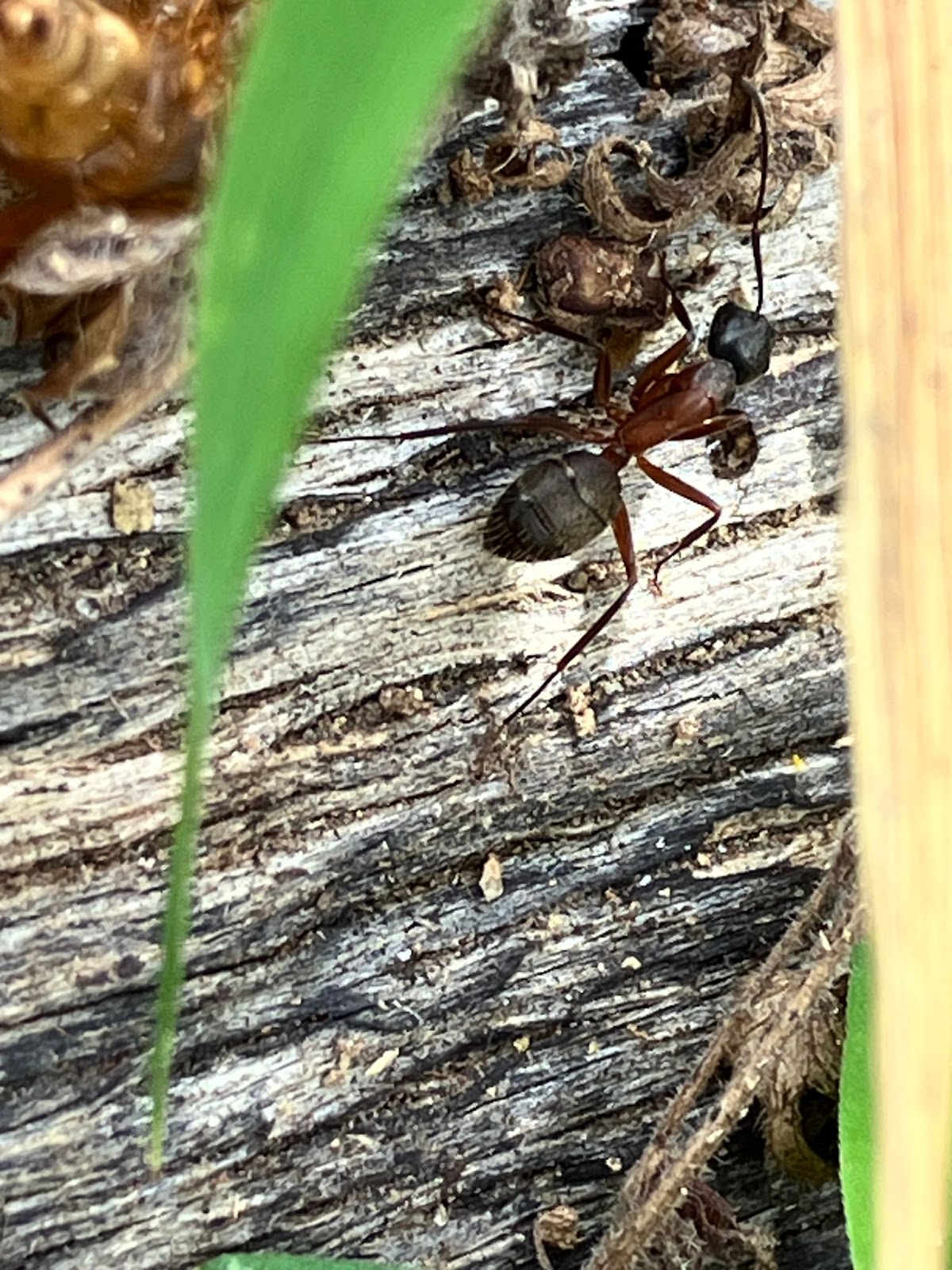
(Photo by the Author: New York Carpenter Ant Camponotus novaeboracensis)


My Project

After becoming interested in insect tracking, I stumbled across an open-source program called DDRP (Degree-Days, Risk, and Phenological event mapping). It uses weather data to calculate degree-days (measures of heating-cooling within a single day) and temperature stress to insects. DDRP then uses that information to predict the emergence, number of generations, and present life stages of various invasive insects. 


I decided to learn how the program worked and try running it for myself by following these detailed instructions. While attempting to run the program on my home PC, I encountered various challenges:

  • I knew very little about programming and had no knowledge of R, the language used to create DDRP. To learn,  I followed beginner tutorials such as Codecademy’s R lesson series and utilized ChatGPT to interpret sections of code I was unfamiliar with over the course of six weeks. 

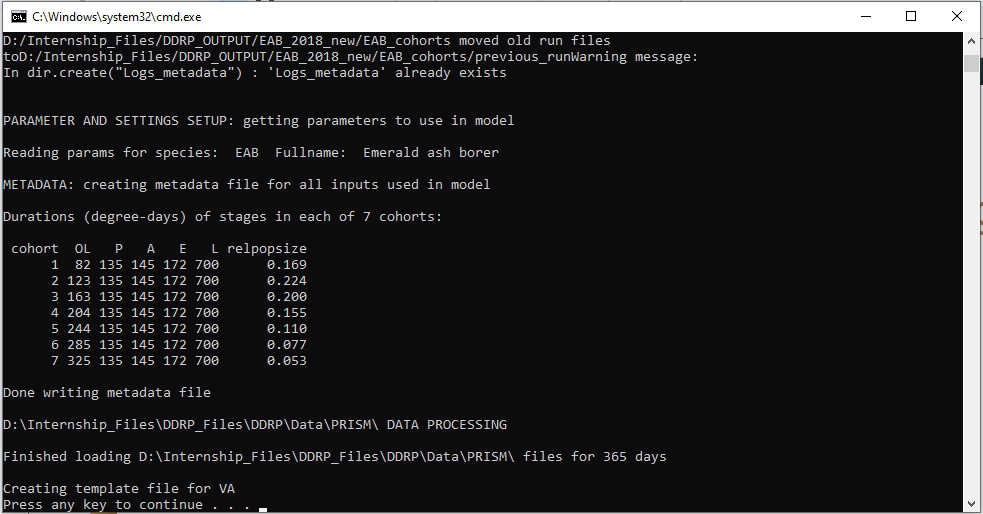
  • I also faced various issues with my setup. One issue was that the program could not create a template file of the specified region. The reason for this was that some of the optional sets of instructions of code (called packages), like Rgdal, that DDRP relies on are no longer supported in R. I had to uninstall R and RStudio and download an older version that ran all of the packages I needed. 

  • I then had some difficulties regarding the permissions for my file system. Something was preventing my files and folders from being taken off of “read-only” status. I spent several hours troubleshooting this via Google, ChatGPT, and Perplexity.ai, but was not able to completely resolve the issue without risking damage to my computer by changing its operational code.

  • There was one other major issue I was unable to resolve completely. For some reason, after changing to an older instance of R, the inputs were being nullified. This prevented the program from actually running the calculations that it needed to in order to operate. In order to diagnose the issue, I edited the code to have the computer print the values of the “year” variable as well as the “keep_leap” variable. These were the two values that were being nullified. Their purposes are to specify the start year for the calculations, and to specify whether the 366th day in leap years should be factored into the calculations. 


A screenshot of the program crashing while attempting to create the template.


A screenshot of the variable nullification issue.


Conclusion

Ultimately, I wasn't able to get the program successfully and completely running on my device, but I learned a lot. I strongly encourage others with an interest in data science – especially as it relates to environmental science – to conduct research and leverage programs like DDRP. It might or might not end up working as expected, but it’s the process of trying things and learning from mistakes that creates the toolset to advocate for change. It’s our world. We all have a part to play in taking care of it.


About Me

Hello! My name is Bridget Baron and I’m an upcoming first year at Barnard College in New York City. As a Senior at Alexandria City High School in Alexandria, VA, I worked as an intern at the Virginia Tech Thinkabit Lab. My major scientific interests are climate change and insects, and working with the VT Thinkabit Lab gave me the opportunity to explore one of the cross-sections between those two: insect phenology. My research into the phenological cycles of insects, and how they’re impacted by climate change, is what led me to this particular research project. 


Thursday, October 31, 2024

Bringing Animals Back from Extinction


Bringing Animals Back From Extinction. Science or Fiction? 

by Zhihan Shi


The famous movie franchise Jurassic Park is all about bringing dinosaurs and other famous extinct animals back from the dead. The first movie was made in 1993, and bringing extinct animals back in just three decades is a bigger possibility than ever. While scientists are not bringing extinct animals back just yet, biotechnology has made significant progress in de-extinction. De-extinction is a field of science involved in resurrecting species that have gone extinct (Carrington). 

The Science Behind De-extinction

How exactly does de-extinction work? A paraphrased definition of de-extinction by The International Union for Conservation of Nature (IUCN) is that it is the ecological replacement of an extinct species by adapting a living organism to serve the ecological function of that species through various means. Essentially, bringing back an extinct organism requires an existing living organism, preferably one closely related (Neuman).

Cloning, also known as somatic cell nuclear transfer (SCNT), is one of the main techniques utilized in de-extinction. This procedure involves inserting the nucleus of a somatic cell from the extinct species into an egg cell whose nucleus has been removed. After that, the egg is encouraged to grow into an embryo that can be placed inside the body of a closely related species' surrogate mother (Neuman). The famed Pyrenean ibex, an extinct subspecies of the Spanish ibex, was used to test this technique; however, the cloned animal died shortly after due to a lung defect (Brian). 

Another technique is genetic engineering, in which researchers modify the DNA of a closely related extinct species by inserting genes from the extinct species, producing an organism that is strikingly similar to the original. Tools such as CRISPR-Cas9 are used in this process. As Dr, Carina Schlebusch puts it, “The genome editing approach is the most viable and, with the availability of DNA-editing techniques such as CRISPR–Cas9, it may be feasible in the near future.” By altering the genome of the Asian elephant, the woolly mammoth's closest living relative, it may be possible to revive the mammoth (Schlebusch). 
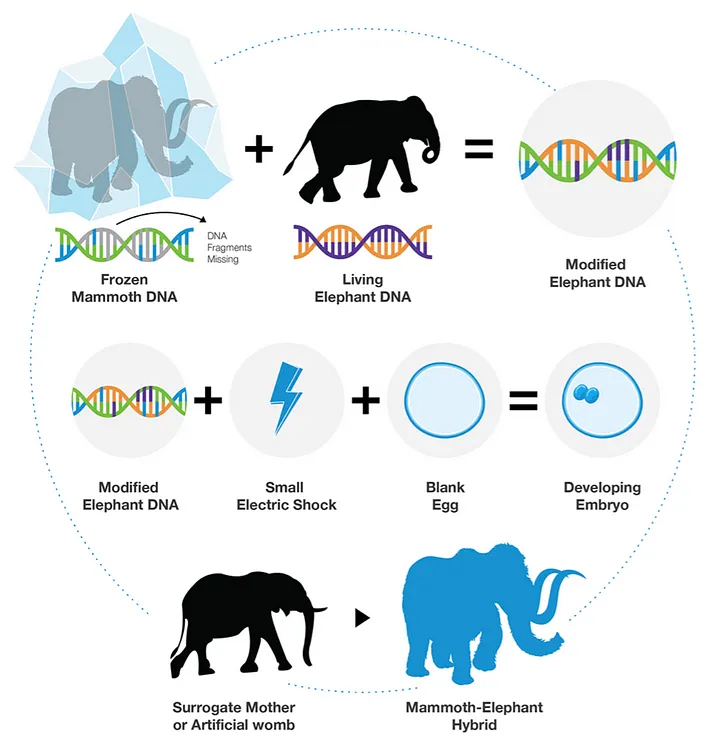


A proposed outline of bringing back the mammoth using biotechnology. 

Source: https://www.worldwildlife.org/

Current Examples of De-extinction

Many companies and researchers are trying to be the first to perform de-extinction. A notable example of de-extinction is the endeavor to bring back the woolly mammoth. To produce a hybrid with the mammoth's cold-resistant features, such as thick fur and subcutaneous fat, scientists are attempting to insert mammoth genes into the Asian elephant's genome. By promoting grassland ecosystems in the Arctic tundra, this initiative, headed by Harvard scientist George Church, aims to create a mammoth-elephant hybrid that may be released into the wild to aid in the fight against climate change. A similar project was done by the company VOW, where they created a mammoth meatball using extinct animal DNA (Carrington). 

Another example is the attempt to bring back the passenger pigeon, a species that was once abundant in North America but went extinct in the early 20th century due to overhunting and habitat destruction. Scientists are using genetic material from preserved specimens to attempt to recreate the species by editing the genome of the band-tailed pigeon, a close relative of the passenger pigeon (Novak). 
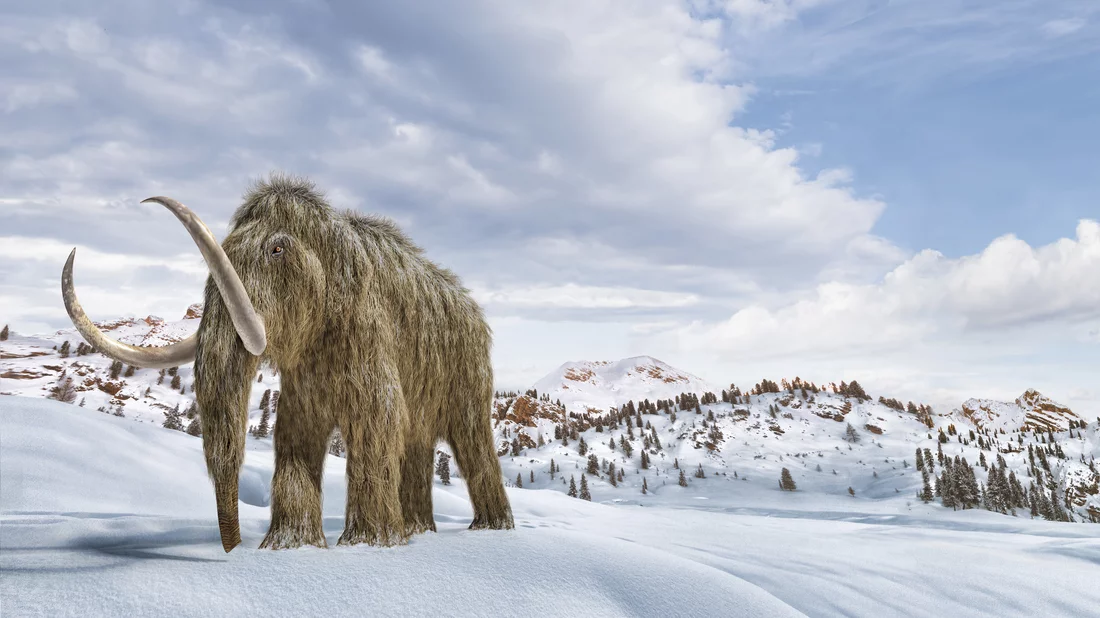
Figure 1: A depiction of the woolly mammoth

Source: www.NPR.org

Conclusion

De-extinction is a promising new field that may see success in the upcoming years due to biotechnological breakthroughs. Different scientific methods have been proposed for de-extinction and it is only a matter of time before one succeeds. As new projects arise for bringing back extinct animals, the ethics of these experiments may need to be called into question. In my next blog post, I will cover more on the future of de-extinction, including new technology like AI and ethical dilemmas. Stay tuned! 


Citation:

Brian, Thomas. “Extinct Ibex Clone Dies at Birth.” ICR, https://www.icr.org/article/extinct-ibex-clone-dies-at-birth/. Accessed 4 Sept. 2024

Carrington, D., & editor, D. C. E. (2023, March 28). Meatball from long-extinct mammoth created by food firm. The Guardian. https://www.theguardian.com/environment/2023/mar/28/meatball-mammoth-created-cultivated-meat-firm. Accessed 4 Sept. 2024

Martinelli, L., Oksanen, M., & Siipi, H. (2014). De-extinction: a novel and remarkable case of bio-objectification. Croatian Medical Journal, 55(4), 423–427. https://doi.org/10.3325/cmj.2014.55.423. Accessed 4 Sept. 2024

Neuman, S. (2021, September 15). Scientists say they could bring back woolly mammoths. But maybe they shouldn’t. NPR. https://www.npr.org/2021/09/14/1036884561/dna-resurrection-jurassic-park-woolly-mammoth. Accessed 4 Sept. 2024

Novak, B. J. (2018). De-extinction. Genes, 9(11), 548. https://doi.org/10.3390/genes9110548. Accessed 4 Sept. 2024

Schlebusch, C. M. (2022). Genomics: Testing the limits of de-extinction. Current Biology, 32(7), R324–R327. https://doi.org/10.1016/j.cub.2022.03.023. Accessed 4 Sept. 2024

About the Author

My name is Zhihan Shi and I’m a senior at Innovation Academy. I’m interested in biotechnology and I’ve been learning about it through classes at my school. Inside of biotechnology, I’m interested in microbiology and molecular biology. 

Zhihan Shi | He/Him

https://www.linkedin.com/in/zhihan-shi-01aa85271/

zhihankshi@gmail.com


Friday, October 11, 2024

Identifying Common Potomac Tree Species in Winter

adapted from the Potowmack Chapter of the Virginia Native Plant Society:


Even when the leaves are not on the trees, you can still identify them by their bark. Here are some common trees in our region that can be identified by their bark. All of these are alternate-branched. For opposite-branched trees, memorize the acronym "MAD-Cap-Horse Buck" for Maple, Ash, Dogwood, the family Caprifoliaceae (honeysuckles and viburnums, mostly shrubs), and the Horse chestnut or Buckeye (Genus Aesculus).