See more on our Facebook page:

Sunday, July 5, 2026

Redhorse Sucker Die-off from Warm Water Temperatures


Downstream (below Springfield and Blue Ford Fisherman's access) we're seeing big die-offs of bigger fish (presumably Golden Redhorse suckers). As most will remember from HS chemistry (Henry's Law in particular), colder water holds more gases, in this case oxygen.
Suckers struggle with water temps over 85 degrees and yesterday the Springfield gauge was almost 89oF. Tuber and kayaker passersby here reported seeing 50 or more dead fish. _________________

The Golden Redhorse (Moxostoma erythrurum) is a native North American sucker fish introduced in the Potomac basin from the the Mississippi, Ohio, and Great Lakes basins. Their distinguishing characteristics include its brassy-gold metallic scales, white belly, and orange or slate-gray fins. These suckers typically measure 12–18 inches and weigh 1–2 pounds.


Between Blue Ford and Indian Rock you can sometimes see hundreds, They thrive in the clear, gravel-bottomed streams and rivers of
West Virginia's New, Ohio, and Potomac river watersheds.


In the figure below you can see the Native range (ochre/yellow) and that the Potomac is in a non-native range (dark red/maroon).  They have been introduced elsewhere in the U.S. too.


Monday, June 29, 2026

Smithsonian Science Education Center Sustainable Agriculture for Educators

 Classroom teachers, informal educators, and community members who support students ages 11–18 worldwide, you're invited to apply to our new, free 12-hour virtual professional development program!

The virtual Smithsonian Science for Global Goals "Agriculture!" Academy will support educators by offering step-by-step guidance and interactive resources to implement our latest community research guide with students and facilitate activities focused on agricultural sustainability.

Through this dual approach, educators will gain insight into integrating interdisciplinary topics into their classrooms from other educators in their cohort, professionals at the Smithsonian Science Education Center, and external collaborators.


By attending this training, you will:

- Learn how to support youth in understanding how agriculture connects to the self and community, and how environmental, economic, cultural, and social systems interact locally and globally. Click Read More to see details nd schedule options.

Monday, June 8, 2026

Zillow trick for studying South Branch river property flooding risk


Flooding, fire and wind risk profiles on real estate sites are helpful beyond considering risk as you look for interesting places to live. You can use the mapping tools to identify wetlands, wildlife habitat, and suitability for certain crops and other information that require expert help the when using the otherwise excellent online NRCS WebSoilSurvey and maybe even the County Assessors pages.

West Virginia Zillow data for flood and fire risk is still spotty (and maybe being blocked?), but you can see the same information by going to a property in Maryland or Virginia, choosing the map and then going to the Lot Lines option, choosing Flood, Fire, or Wind. Then scroll into our West Virginia watershed. In many cases you can discern annual risk, 1% risk ("100 year"), or 0.2% risk ("500 year") flood zones. It's good to review this - these zones have changed a lot in the last 20 years.


But as most know, for a specific address, use the FEMA Flood Map Service Center at https://msc.fema.gov/portal/home 

Wednesday, June 3, 2026

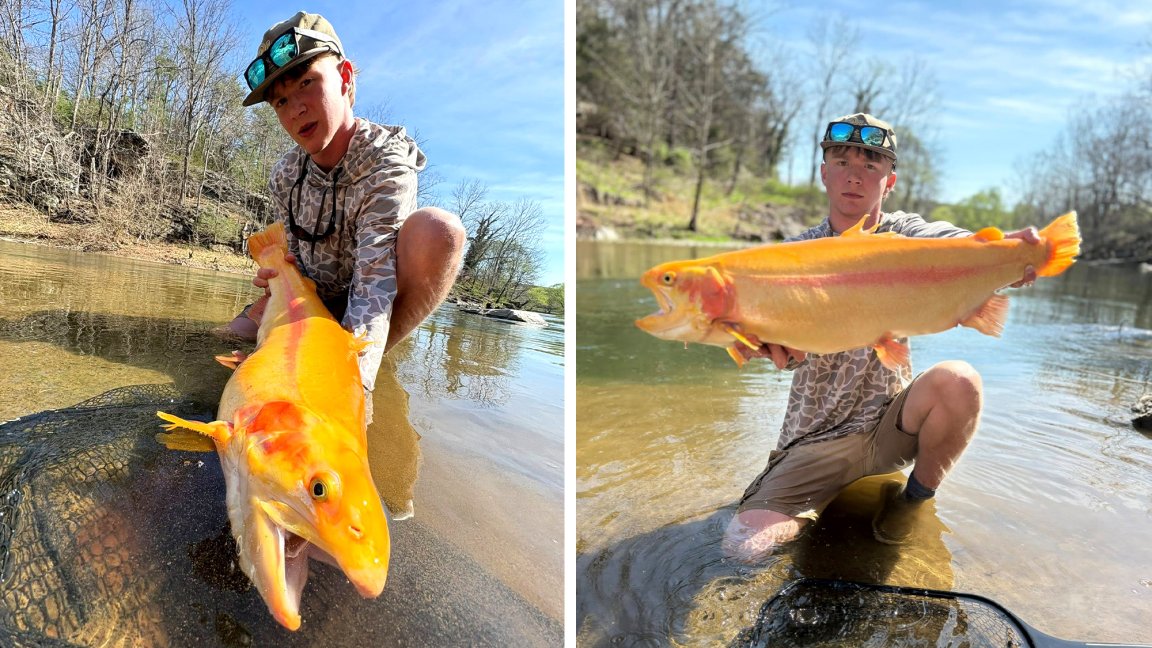
State Record Golden Rainbow Trout from the South Branch

 This actually happened in early April.  I learned about it only today (June!) in West Virginia Magazine.  The following is an earlier April 13 article by Bob McNally I found in Outdoor Life Magazine online.

‘Too Fat to Jump.’ West Virginia Teen’s Massive Golden Rainbow Trout Is a Pending State Record

Fifteen-year old Hunter Rohr spotted the fish in a deep hole and hooked it on a dead-drifted egg
A teenager with a pending state-record trout.
Hunter Rohr with the pending state-record golden rainbow trout he caught on April 2. Photo courtesy Hunter Rohr

Every spring, West Virginia anglers head out on their own “Gold Rush.” The special two-week event revolves around golden rainbow trout, a unique strain of gold-colored rainbows that are produced in state hatcheries. This year, the West Virginia Department of Natural Resources stocked 50,000 of these trout in 69 lakes and streams. One hundred trout were tagged and worth special prizes.

Fifteen-year-old Hunter Rohr was one of the anglers looking for gold this month. On April 2, during his spring break, he and his high high-school buddy Bryar Sandy were searching for fish in streams near Rohr’s home in Buckhannon.

Read Next: Palomino Trout: The Lure of the Golden Mutants

Rohr and Sandy had started fishing at 7 a.m. that morning. They’d each caught a few smaller golden rainbows and released them all as they usually do. Around noon, they found a pile of fish in a deep hole on the South Branch of the Potomac River.

“We call it the South Branch of the Smoke Hole, and we fish it a good bit,” Rohr tells Outdoor Life. “That day we were using light spinning tackle, four-pound test line and floats to try and catch a golden. We wanted one with a tag.”

The water was deep but clear, and there were some other anglers working the same stretch of water. Using a pair of quality polarized sunglasses, he spotted an especially large fish holding near a log on the bottom.

Click <more> below for more photos.

Monday, May 25, 2026

Cresting just below Action Level (12 feet) this week


Cresting overnight in the early hours Thursday morning?

Watch for changes at the NOAA site:
https://water.noaa.gov/gauges/sprw2

Recreation is hazardous above 5 feet.

At Action Level (12 feet on the Springfield gauge) there is minor flooding on riverside roads and camps, and docks, steps, and canoes and kayaks can be swept away.  


Sunday, May 24, 2026

Sustained Rain Overcomes Virginia - West Virginia Drought Concerns

 Steady moisture over several days is ideal for recovering from the drought. The whole watershed was affected, and you can see the expected change in the river level.


Sunday, April 19, 2026

Flight over the confluence of the North and South Branches of the Potomac

Video by Cessna 42A  Branches of the Potomac.

Click here to watch: https://www.facebook.com/share/v/1E29ZiyZvW/


The confluence of the North and South Branches of the Potomac just east of Green Spring, West Virginia. In this view, the North Branch is coming from the straight ahead. The South Branch enters from the left, with the rivers joining at the railroad bridge. The old Chesapeake & Ohio canal - with water in it - is to the right of newly formed Potomac, running along the base of that hill. Oldtown, Maryland and Green Spring, West Virginia are visible in the middle distance on either side of the North Branch, with Cumberland hidden in the valley beyond that next far ridge.